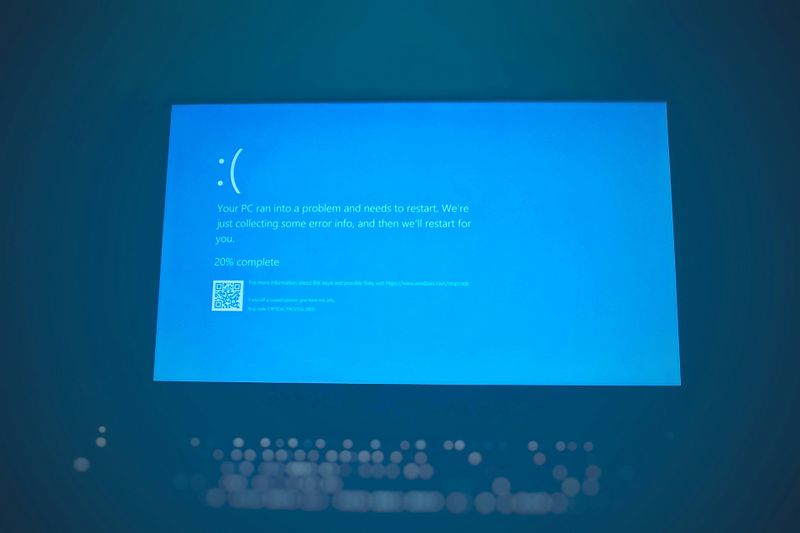
SaaS modernization is the process of evolving legacy SaaS platforms to remain competitive in a fast-moving market.
Many SaaS products start strong. They launch with a clear value proposition, gain traction, and grow steadily. Over time, however, complexity increases. Features are added. Workarounds become permanent. Release cycles slow down.
What once felt modern begins to feel heavy.
Markets move faster than they did five years ago. Users expect seamless performance, intuitive interfaces, and real-time integrations. Security standards evolve. AI capabilities become standard rather than optional. Competitors ship faster and experiment more freely.
Legacy SaaS does not fail overnight. It gradually loses momentum.
SaaS modernization is not about rewriting everything from scratch. It is about making deliberate improvements that restore flexibility, reduce friction, and create room for innovation. Done well, it strengthens both the product and the business behind it.
In the sections below, we explore why legacy SaaS falls behind, what modernization truly involves, and how it can be approached without unnecessary disruption.
Legacy SaaS does not lose relevance because of age. It falls behind when it can no longer adapt at the pace the market demands.
As products grow, complexity grows with them. Features are layered on top of each other. Integrations expand. Deadlines tighten. Small compromises that once felt acceptable begin to accumulate. Over time, this creates structural friction that slows everything down.
Most mature SaaS platforms carry some level of technical debt.
Technical debt emerges when short-term delivery is prioritized over long-term structure. A quick workaround solves today’s issue, but it often introduces tomorrow’s limitation. Individually, these decisions rarely cause damage. Collectively, they reduce flexibility.
The result is a system that becomes harder to change. Development slows. Testing requires more effort. Teams spend increasing amounts of time maintaining existing functionality instead of improving it. Innovation does not stop, but it becomes cautious.
Architecture decisions that once supported growth may no longer fit the current scale of the product. What worked for a smaller user base may struggle under higher load, more integrations, and larger data volumes.
When this happens, performance issues surface and reliability becomes less predictable. Structural choices such as microservices versus monolithic architecture start to influence not only performance, but also how easily the product can evolve.
If the foundation does not support expansion, every new feature becomes heavier to implement.
Legacy SaaS platforms often experience slower release cycles. Changes feel risky because dependencies are tightly connected. A small adjustment in one area can have unexpected effects elsewhere.
As a result, deployments become less frequent and more complex. Instead of iterative improvement, updates are bundled into larger releases. This reduces room for experimentation and limits the ability to respond quickly to market shifts.
There are usually early signs that this pattern is emerging. Recurring delays, recurring bugs, and rising coordination effort are rarely isolated incidents.
As complexity increases, maintenance begins to consume a larger share of development capacity. Teams focus on stabilizing integrations, resolving performance bottlenecks, and preventing regressions.
Over time, the cost of neglected software becomes visible. Resources that should drive product evolution are redirected toward preserving stability. The system still functions, but it absorbs energy rather than generating progress.
Legacy SaaS falls behind gradually. The real risk is not sudden failure, but a slow erosion of agility. When a platform limits strategic change, modernization becomes less optional and more inevitable.
SaaS modernization is not a full rewrite. It is a structured effort to improve the parts of a platform that limit growth, speed, or scalability.
Many assume modernization means rebuilding everything from scratch. In reality, that is rarely the best approach. Modernization is about making deliberate improvements that reduce friction and restore flexibility. The scope depends on where the real constraints sit.
The broader concept of application modernization shows that modernization operates on multiple levels, not just in the codebase.
Technical modernization focuses on architecture, infrastructure, and system design. This may involve restructuring components, improving APIs, migrating to more scalable cloud infrastructure, or strengthening security standards.
The goal is not novelty. The goal is resilience and flexibility. A modern technical foundation allows teams to ship faster, scale predictably, and integrate new capabilities without heavy refactoring.
Choosing the right tech stack also plays a role here. Technology decisions should support long-term evolution, not short-term convenience.
Modernization is also visible at the product level. Over time, user interfaces age. Workflows become cluttered. Performance degrades under increased usage.
Product modernization focuses on clarity and usability. This may include simplifying flows, improving responsiveness, or adding capabilities that users now expect, such as automation or data insights.
A technically stable system without a modern user experience still risks losing relevance.
The third layer involves how the software is built and maintained. Slow release cycles, manual deployments, and limited observability restrict innovation.
Operational modernization introduces structured CI/CD pipelines, better monitoring, automated testing, and stronger DevOps practices. These changes reduce risk while increasing deployment frequency.
Modernization, therefore, is not a single project. It is a coordinated effort across architecture, product, and operations. When these layers align, the platform regains speed and adaptability without unnecessary disruption.
There is no single path for SaaS modernization. The right strategy depends on system complexity, business priorities, and risk tolerance.
Some platforms require structural change. Others benefit from gradual refinement. The key is choosing an approach that improves flexibility without disrupting continuity.
In many cases, modernization starts with incremental refactoring. Instead of rebuilding the platform, teams improve critical components step by step.
This approach reduces risk. It allows improvements to be validated in production while keeping the core system stable. Over time, legacy areas are replaced or restructured without a disruptive transition.
Refactoring works best when guided by a clear architectural vision rather than isolated fixes.
As systems grow, tightly coupled components become a constraint. Extracting services from a monolithic core can restore flexibility and improve scalability.
Architectural decisions such as moving toward microservices must be made carefully. Service separation can improve deployment speed and ownership, but it also introduces operational complexity. The structure should match the scale and maturity of the platform.
Modernization is not about following trends. It is about reducing bottlenecks.
Some SaaS platforms are limited by infrastructure rather than code. In these cases, replatforming to modern cloud environments can unlock scalability and reliability.
Cloud-native services improve elasticity and fault tolerance. However, infrastructure changes must align with the overall architecture. Without structural clarity, moving to the cloud simply relocates existing inefficiencies.
There are situations where certain components are too fragile or outdated to refactor effectively. In those cases, rebuilding specific modules may be more efficient than incremental improvement.
This does not require a full rewrite. Targeted rebuilding allows high-impact areas to be modernized while the rest of the platform continues operating.
In some scenarios, replacing internal components with managed services reduces maintenance burden. Authentication, search, analytics, or messaging infrastructure can often be handled by mature external solutions.
This frees up development capacity for core product innovation.
Every modernization strategy involves trade-offs between speed, cost, and risk. The objective is not technical perfection. It is sustainable progress that restores agility and prepares the platform for future growth.
Modern SaaS is increasingly shaped by data and AI capabilities. Expectations have shifted. Intelligent features are no longer optional enhancements. They are becoming baseline requirements.
Users expect automation where manual steps once existed. They expect systems to surface insights instead of simply storing data. Predictive suggestions, smart workflows, and contextual recommendations are now part of competitive differentiation.
However, AI features cannot compensate for structural weaknesses. If data is fragmented or inconsistent, intelligent functionality becomes unreliable. If architecture is rigid, adding new data pipelines becomes complex and slow.
Modernization therefore creates the foundation for AI. Clean data models, well-defined APIs, and scalable infrastructure enable experimentation without destabilizing the core platform.
There is also a performance dimension. AI workloads increase computational demand. Without scalable infrastructure, intelligent features may degrade overall system responsiveness.
In practice, SaaS modernization and AI readiness are closely connected. A platform that cannot adapt structurally will struggle to integrate advanced capabilities in a stable and controlled way.
The goal is not to add AI for visibility. The goal is to create a system where intelligent features enhance value without increasing operational risk.
Modernization must improve the system without destabilizing it. Innovation creates value, but continuity protects it.
Legacy SaaS platforms often serve active customers, critical workflows, and ongoing integrations. Abrupt architectural shifts or large rewrites introduce unnecessary risk. Stability cannot be sacrificed for speed.
A structured approach reduces disruption. Backward compatibility ensures existing functionality continues to work during transition. Feature flags allow new capabilities to be introduced gradually. Incremental rollouts make it possible to validate changes in controlled stages.
Risk management is central to this process. Many modernization efforts fail not because the technical direction is wrong, but because scope expands, coordination breaks down, or expectations are misaligned.
Clear planning, phased execution, and transparent communication limit uncertainty. Teams should understand not only what is changing, but why it is changing and how it affects long-term strategy.
Modernization is therefore not only a technical exercise. It is a coordination effort across architecture, product, and operations. When continuity is protected, innovation becomes sustainable rather than disruptive.
SaaS modernization must lead to measurable improvement. Without clear indicators, it becomes difficult to assess whether the effort delivers real value.
One important metric is deployment frequency. When architecture and operations improve, releases become smaller and more frequent. This increases responsiveness and reduces risk per change.
Time to market is another indicator. If new features move from idea to production faster, modernization is improving agility. This reflects both technical structure and operational maturity.
Infrastructure cost also deserves attention. Modern cloud optimization and architectural improvements often reduce waste. Efficient scaling prevents overprovisioning while maintaining reliability.
System reliability is equally important. Fewer incidents, faster recovery times, and improved observability signal a healthier platform. Stability supports growth rather than limiting it.
As platforms expand, avoiding scaling mistakes becomes critical. Poor scaling decisions can undermine the benefits of modernization if growth is not supported by proper structure.
Customer retention and engagement provide the final layer of validation. A modernized platform should not only operate better internally, but also deliver a more consistent and responsive user experience.
Modernization is successful when it increases speed, reduces friction, and strengthens resilience at the same time. Cosmetic upgrades may improve appearance. Structural improvements change performance.
SaaS modernization is not a one-time upgrade. It is a continuous capability that protects long-term competitiveness.
Markets evolve. Technology shifts. User expectations increase. A platform that feels modern today can quickly become restrictive if improvement stops. The real objective is not to reach a perfect technical state, but to create a system that can adapt without excessive cost or risk.
When modernization is embedded in strategy, architectural decisions support growth instead of limiting it. Technical debt is addressed early. Infrastructure scales predictably. Product innovation moves forward without destabilizing the foundation.
Platforms that postpone modernization often face larger, riskier transitions later. Platforms that treat it as an ongoing discipline maintain control over their evolution.
If your SaaS platform is starting to slow down or limit strategic progress, it may be time to reassess its foundation. To explore what a structured modernization path could look like, contact us to discuss your current architecture and future plans.
SaaS modernization is the structured improvement of architecture, infrastructure, and product capabilities to increase scalability, performance, and flexibility. It focuses on removing structural bottlenecks rather than rebuilding everything from scratch.
Modernization becomes necessary when release cycles slow down, maintenance costs rise, or new features become difficult to implement. Performance issues, recurring bugs, and limited scalability are also common indicators.
In most cases, incremental modernization reduces risk and protects business continuity. A full rebuild may be justified when architecture severely limits growth, but it carries higher operational and financial risk.
Not necessarily. Many platforms already run in the cloud but still require architectural improvements. Cloud migration can support scalability and reliability, but structure and design remain the critical factors.
The timeline depends on system complexity and scope. Incremental improvements can deliver value within months, while deeper architectural changes may take longer. A phased approach typically reduces disruption and improves predictability.
As a dedicated Marketing & Sales Executive at Tuple, I leverage my digital marketing expertise while continuously pursuing personal and professional growth. My strong interest in IT motivates me to stay up-to-date with the latest technological advancements.
Modernizing legacy SaaS requires clear priorities and disciplined architectural choices. Tuple helps software teams improve structure, scalability, and delivery speed step by step, without unnecessary disruption.
Explore your modernization options